Why Clutter Keeps Coming Back: The Physics Behind the Pile
What a recurring pile can tell us about our space, our energy, and the support we need.
We clear the chair, and for a little while, we have a chair again.
Then a cardigan lands there. A pair of jeans. The shirt we tried on and decided against. We walk past it a few days later and feel that familiar disappointment. We already took care of this.
How did we end up here again?
If we're neurodivergent, we may have spent years trying to follow organizing advice that leaves out how we experience our days. Mental health struggles can change what we have available, too. The laundry we managed last week can feel like far too much this week.
I want to look at that chair with a little kindness before we ask anything more of ourselves. There is information in what keeps landing there. Understanding it gives us something more useful than another promise to do better.
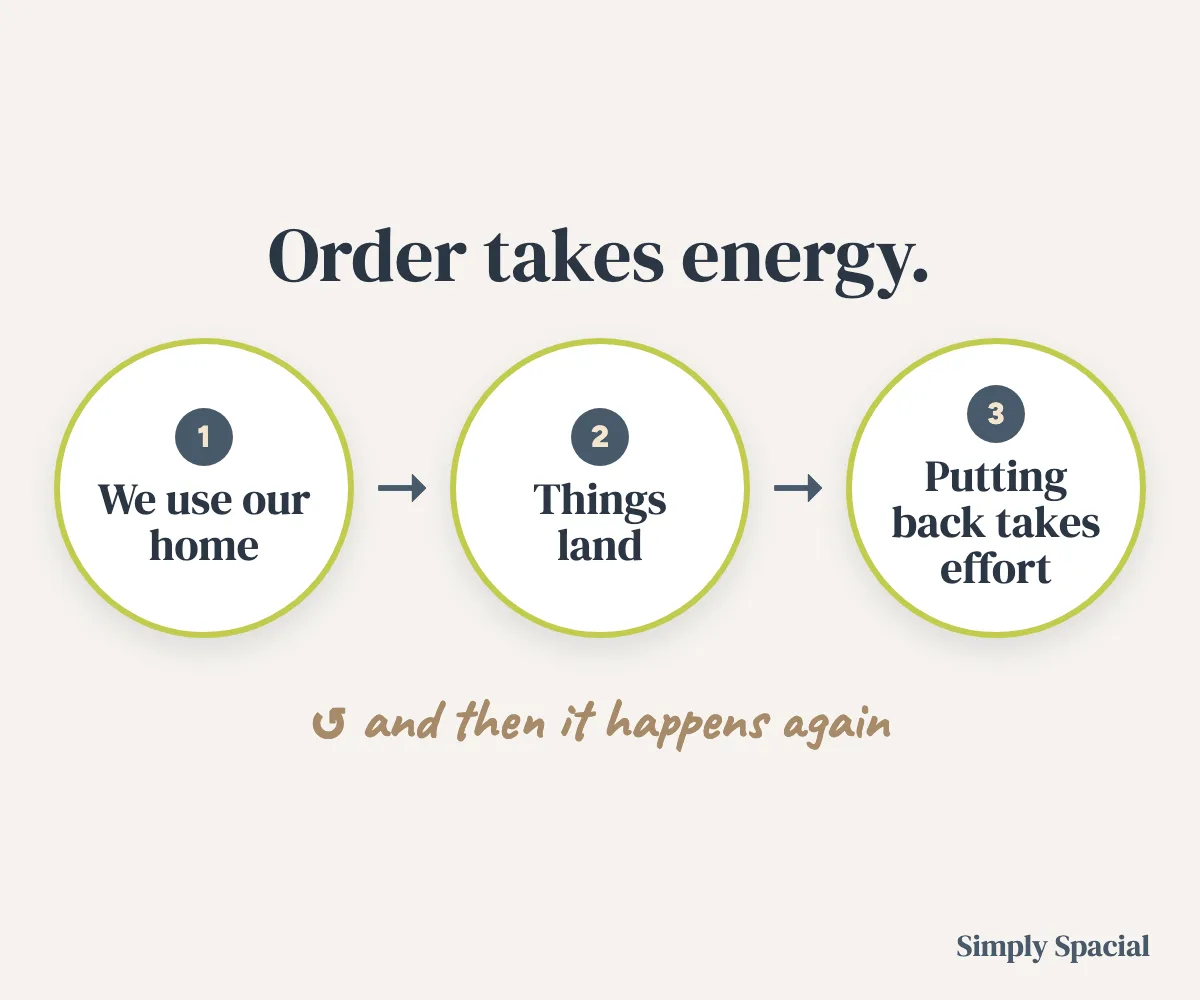
Order takes energy, and we live here
Physics gives us a useful way to think about this.
You may have heard the word entropy used to describe things becoming disordered. In physics, it has a precise meaning involving energy and the ways matter can be arranged. We can borrow it as an analogy for our homes, while recognizing that it doesn't explain why a particular shirt ended up on a chair.
At home, we can see something very familiar: keeping things in a particular arrangement takes ongoing effort.
We get dressed. Make lunch. Bring in the mail. Pull out the blanket because we're cold. Every one of those ordinary moments changes the space around us, and returning things to their places takes time, movement, and attention.
The cardigan doesn't return itself to the closet.
We are part of that process. So is everyone who shares our home. And the effort available to us changes with the day we're having.
That is what I want us to remember when we look at a pile. A home is being used. Its care is ongoing. Finishing the laundry on Sunday doesn't mean we won't need to care for our clothes again on Thursday.
We can expect movement without making every change in our space mean something about our character.
I know how much an organized home can help. I also know its limits.
Organizing is one of the ways I care for myself.
My keys need one home. When they don't have one, the search and frustration can take over far more of my day than I want to give them. Knowing where things belong gives me support I depend on.
But there was a time when my house was fully organized and I was working too hard. I wasn't drinking enough water. I wasn't taking time off.
Everything had a place, and I still needed care.
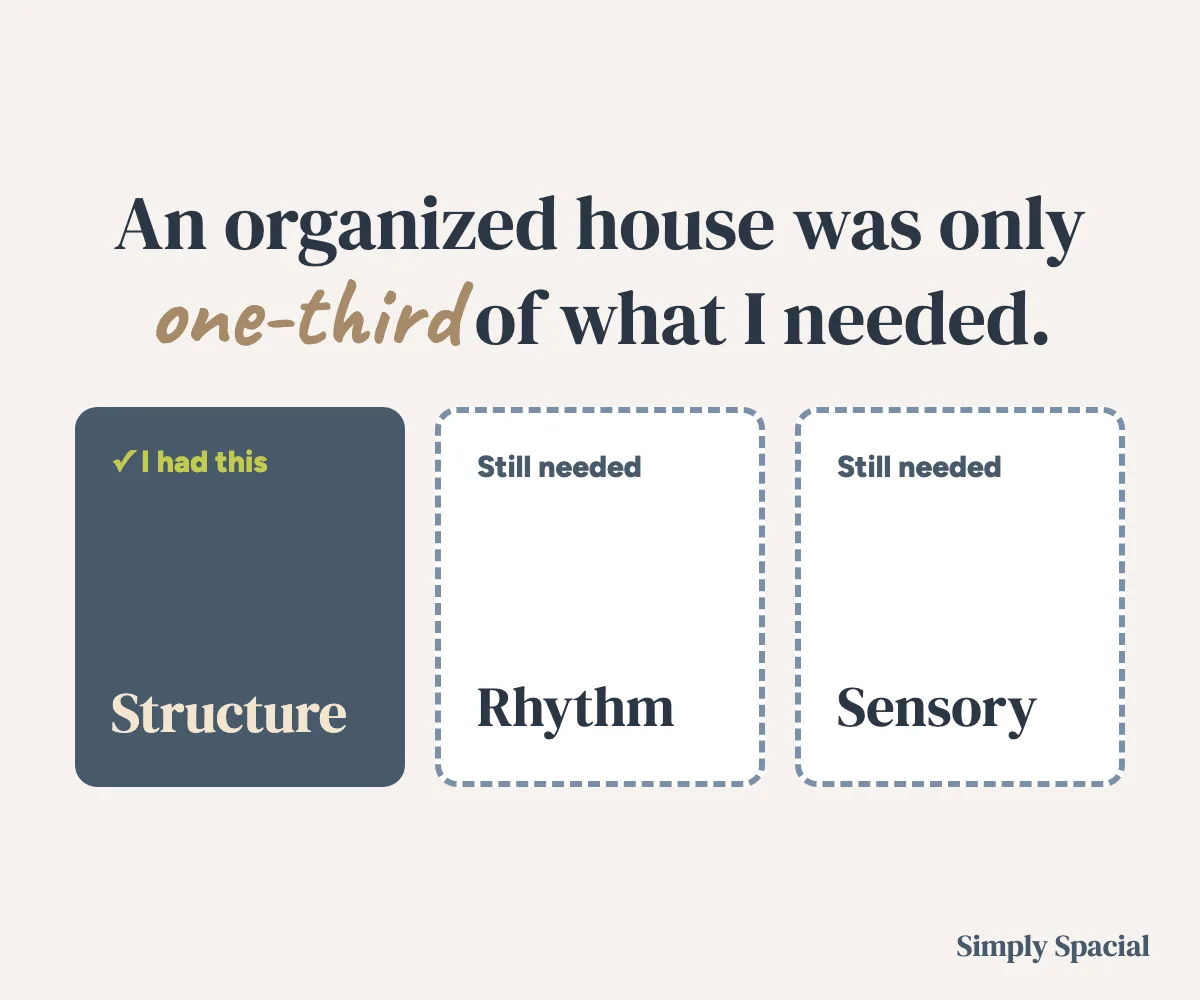
An organized house was only one-third of what I needed. I also needed to look at the rhythm of my days and how I was caring for my mind and body.
That experience shapes how I look at a home. I want to know where the belongings go, and I want to understand the life happening around them. What does the evening ask of us? When do we get to rest? How does the space feel when we come back to it tired?
The chair is part of that picture.
The pile has been showing us where something stops
Let's go back to the cardigan.
We've worn it for a few hours. It doesn't need washing, but we don't want to put it among the freshly washed clothes. We're getting ready for bed, and the chair is right there.
So we put it down.
In that moment, the chair has a job. It is the place for clothes that are somewhere between wearing and washing. We haven't given those clothes another home that feels right, so they keep returning to the one available.
We could clear that chair every evening and keep meeting the same decision. Or we could recognize that the cardigan needs somewhere to go in this part of its use.
A nearby hook might be enough. One shelf might work. The important discovery comes before choosing either: we understand why the clothes are there.
That is what I mean when I say the pile is data.
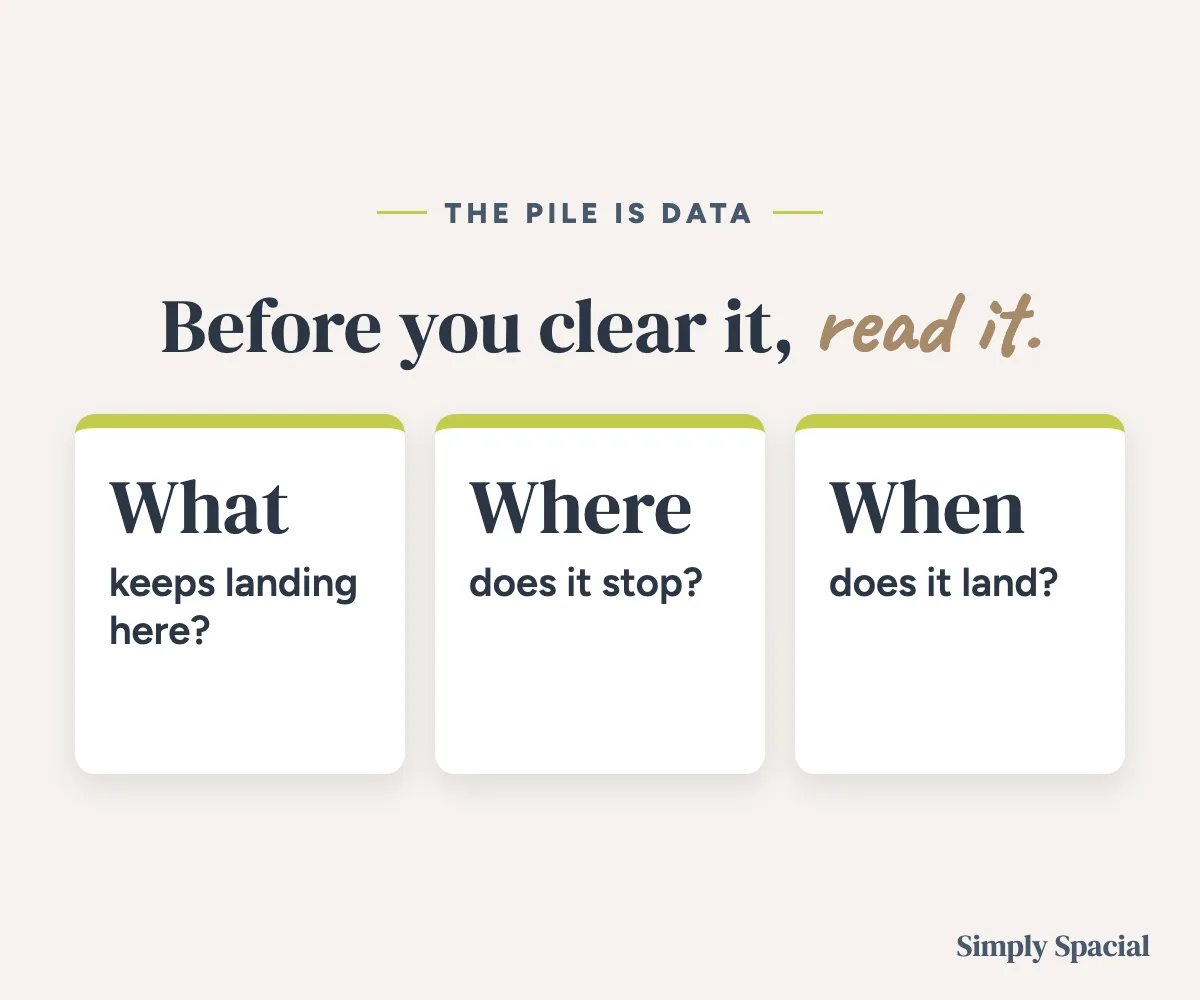
The belongings, the location, the moment we put them down—all of it tells us something. We can begin to see the effort our current arrangement asks of us, and where a little support is missing.
Our spaces need to leave room for tired days
Even a well-chosen home for the cardigan needs to be usable at the end of the day.
If reaching it means opening an overfilled closet and moving three other things, we're asking quite a lot of one tired moment. If the light makes it difficult to see, or feels harsh when we're winding down, that is part of the experience too.
This is where structure, rhythm, and sensory meet.
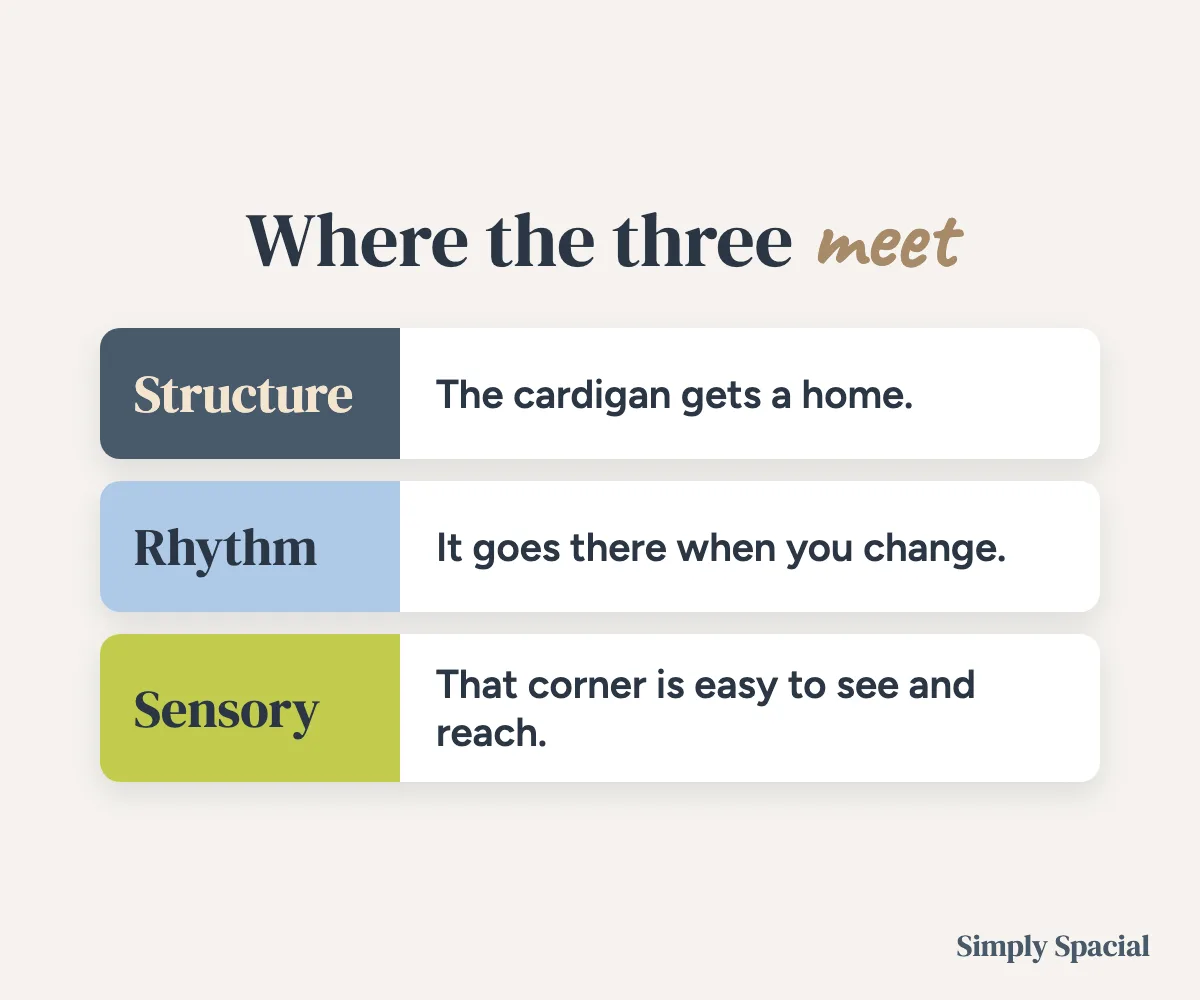
Structure gives the cardigan a home. Rhythm connects putting it there with getting changed. Sensory means we consider how that corner feels to use—the light, what is in view, what feels comfortable to reach for.
Comfort looks different for each of us. Some people want fewer things in sight. Others want to see their clothes so they can remember and choose them. Some prefer softer light; others need more brightness.
We get to pay attention to our own experience.
When I look at a space this way, the question becomes more specific and more compassionate: what would make caring for this part of our home ask less of us?
We can build from that answer. And when our days change, we can make adjustments.
Before we clear it again, we can get curious
The pile may still be inconvenient. We may want our chair back. We can want that and approach it without turning against ourselves.
Next time you notice a familiar pile, pause with one thing in it. Think about what was happening when it landed there. Were you leaving the house? Getting ready for bed? Keeping something visible because you needed to remember it?
There is a life around that object. There is a reason it stopped there.
Understanding that reason gives us a place to begin making the space more supportive. We don't have to solve the whole home in that moment.
You deserve somewhere to put the cardigan, somewhere to sit down, and room in your day to enjoy being home.
If you'd like to explore your own space with me, my free five-day Home Organizing Starter Course is a place to begin. Through email lessons, I share how to understand what's happening in your space and choose where to start.
Questions people ask
Why does clutter keep coming back after I organize?
Because order takes ongoing energy. Every ordinary moment, like getting dressed or bringing in the mail, moves things around, and putting them back takes time and attention. A pile coming back is not a sign you failed.
Is a messy home a character flaw?
No. Things drift and piles grow. That’s physics, not character. If you’re neurodivergent or living with mental health challenges, the energy you have changes from day to day, and so does what you can keep up with.
What does “the pile is data” mean?
What lands in the pile, where it stops, and when it lands all tell you something. A pile usually shows where something has no home that feels right, or where a step asks too much of a tired moment.
Where should the clothes on the chair go?
Somewhere made for clothes between wearing and washing, like a nearby hook or one shelf. First notice why they land on the chair. Then choose a home that’s easy to reach at the end of the day.
How do structure, rhythm, and sensory help with a pile?
Structure gives the item a home. Rhythm connects putting it there with something you already do, like getting changed. Sensory makes that spot comfortable to use: the light, what’s in view, and what’s easy to reach.